Why heat protection matters
Heat exposure does not start only with a curling iron. Regular blow-drying, brushing and hot tools also affect the lengths, so heat protection is a separate leave-in step before drying.
The role before heat
Heat protection creates a thin layer that helps distribute the thermal load and reduces the dryness, brittleness and roughness that often appear with regular drying or hot-tool use.
It is not a balsam or a mask
Balsam and mask are rinse-off base-care products. Heat protection is a leave-in with a different function: it works right before drying and stays on the hair until it meets hot air or a hot tool.
Why oil does not replace heat protection
Oil is a finishing step for shine and a polished look after drying. Its function and formula differ from a dedicated heat protectant. Using oil in place of heat protection does not provide the same level of protection before heat.
Why it matters even for healthy hair
Regular hot air is a form of exposure that gradually adds to the normal wear of the lengths. Heat protection helps maintain smoothness and reduces the accumulation of small damage over time.
When heat protection is optional
If the hair air-dries naturally without a hairdryer or hot tools, a dedicated heat protectant is not needed. In that scenario, base care with shampoo, balsam and — if desired — a little oil on the ends is enough.
Step by step
- 01After shampoo, mask and balsam, gently squeeze out excess water.
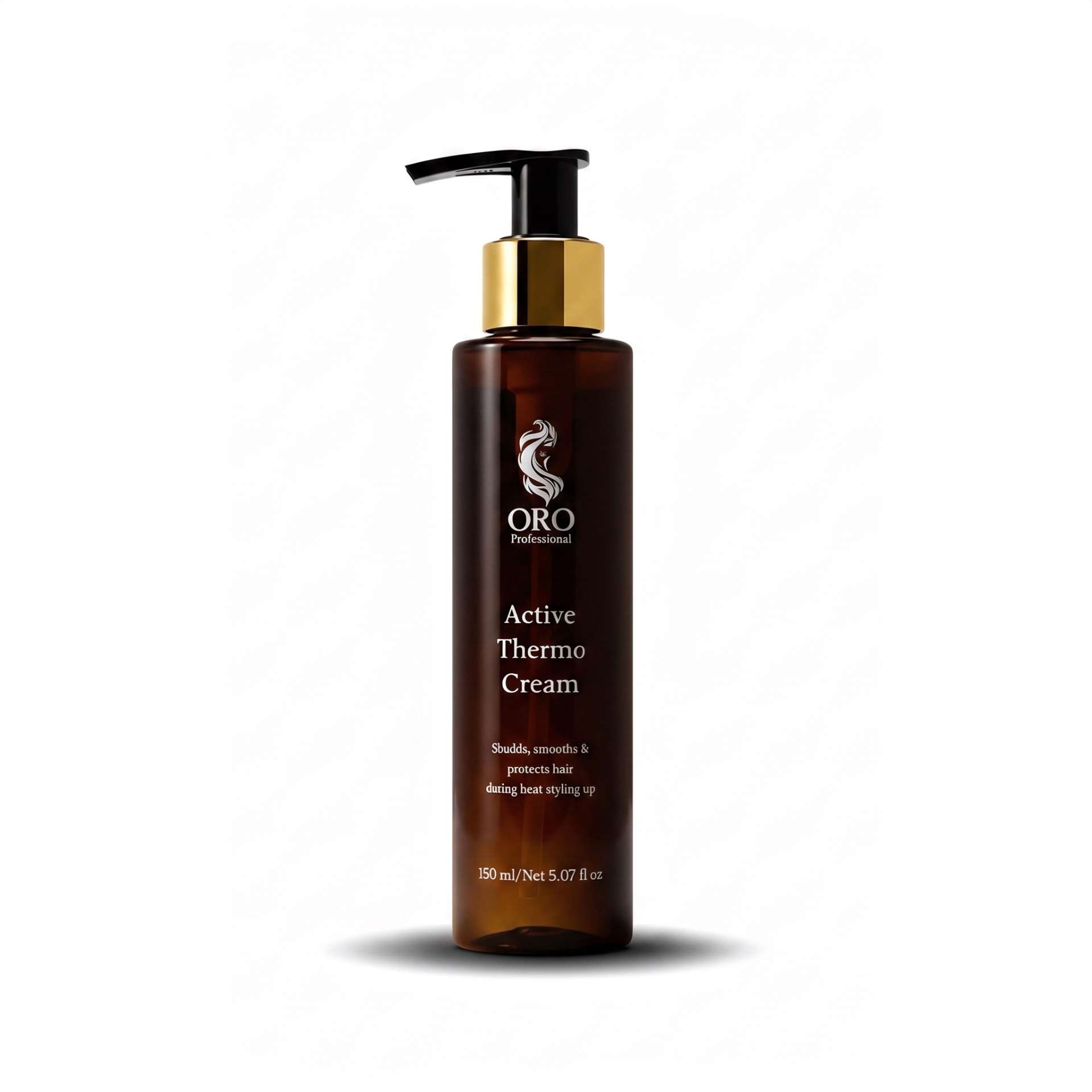
- 02Take a small amount of Active Thermo Cream appropriate for your length and density.
- 03Distribute across the damp lengths, staying roughly 5 cm away from the roots.
- 04Do not rinse.
- 05Blow-dry the hair or continue with hot tools.
- 06Use oil only after the hair is fully dry, if desired.
Common misconceptions
- Heat protection is needed only for a flat iron.
- Oil protects in the same way.
- Heat protection should be applied to dry hair after drying.
- A larger amount gives more protection.
Related guides
- 05Finishing
How to use hair oil
Why you should start with a single drop, where to apply oil and its place in the finishing routine.
A concise practical guide → - 01Cleansing
How to wash your hair correctly
Why shampoo is applied primarily to the scalp, when a second cleanse helps and why you should not scrub the lengths.
A concise practical guide → - 02Base care
Why hair needs balsam
What balsam actually does, how it differs from a mask and why it remains the base step after every wash.
A concise practical guide →
Products related to this topic
The right choice depends on your hair — take the personal match if you are unsure.
The personal match shortens the path
A few short questions — and you receive a base system, one mask and the finishing steps that suit your hair.
Start the personal care match